The Legend of Jack and the Giant Cormoran

The Legend of Jack and the Giant Cormoran

Giants and LegendsHanxue School · Blog

The Legend of Jack and the Giant Cormoran

By Hanxue SchoolOctober 20262 min read
Cover image for the legend of Jack and the giant Cormoran

Cornwall is a county in the southwest of England, considered a land of giant legends in several of its towns and villages. Off its coast, near where the people of Cornwall live, there is a small island, Saint Michael's Mount (San Miguel in Spanish), where the giant Cormoran built a fortified house from which he terrorized the inhabitants of Marazion.

The locals lived in fear of the giant, who plundered and robbed every time he entered a coastal town, and they had no way to confront him to defend their lives and their property.

In a nearby village called Land's End, a young man named Jack, who lived there, heard the news coming from Cornwall and set to work. He went to Saint Michael's Mount and dug an enormous hole, which he then covered completely with plant remains.

So enraged that he did not see where he was stepping.

Once the trap was ready, Jack, using a horn, began to make very loud noises that annoyed and agitated the giant. Desperate, Cormoran rushed down from the mountain where his house stood, so enraged that he did not see where he was stepping, and without realizing it he fell into the trap that had been set.

With Cormoran trapped and unable to climb out of the hole, little Jack mortally wounded him with his spear and filled the hole with earth again. This was enough for Jack to become a hero. People came out of their homes shouting his name and gave him a sword inscribed with the words “Who killed the Giant Cormoran.” Besides the sword, Jack was given livestock and other goods.

Illustration of Jack and the giant Cormoran

On Saint Michael's Mount, next to the church in the village of Morvah, there is a large stone that, according to legend, marks the grave of the giant Cormoran. If you place your ear on that stone, you can hear the beating of the giant's heart, because it seems that Jack did not finish him off.
← Back to blog
How Do the British Spend the Summer?

How Do the British Spend the Summer?

Life in the UKHanxue School · Blog

How Do the British Spend the Summer?

By Hanxue SchoolOctober 20263 min read
Brighton beach full of people in summer
Brighton beach in summer. via Wikimedia Commons.

When summer arrives, many people in the United Kingdom take advantage of the longer days and generally milder temperatures to enjoy outdoor activities. Although the weather can change quickly and rain is still possible, this season is a chance to go out, travel and spend time with family and friends.

A popular activity is visiting coastal towns such as Brighton, where you can walk along the seafront, enjoy the beach and try the traditional fish and chips. Some people spend the day by the sea, visit small shops or enjoy the attractions on the piers.

Although British beaches don't always have ideal temperatures for swimming, they are still popular destinations on sunny days.

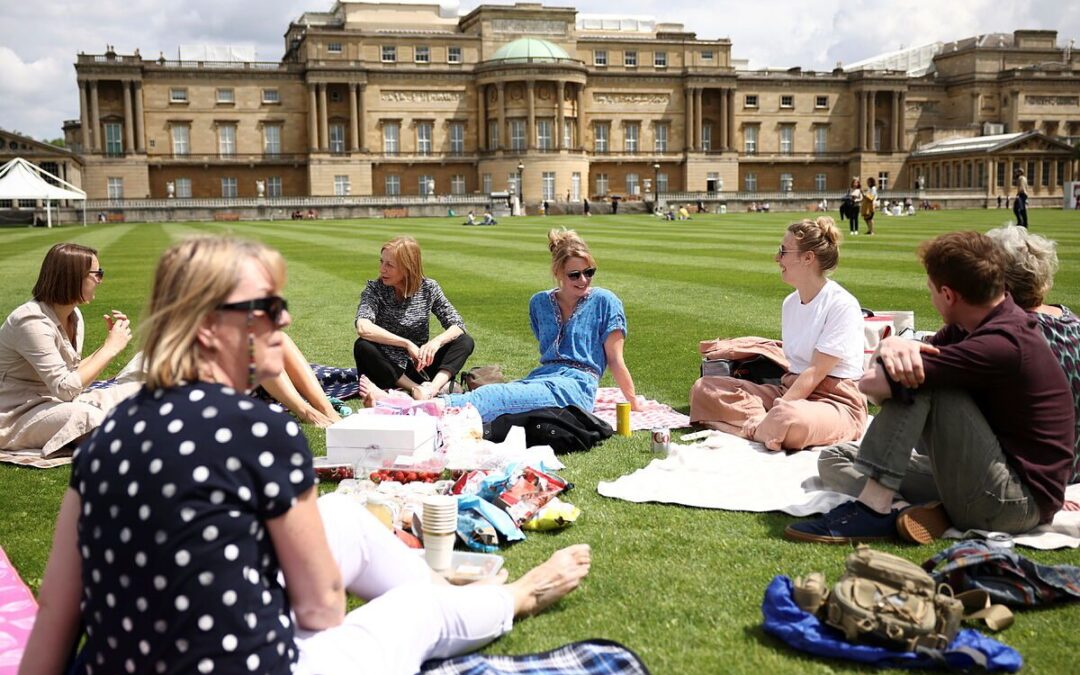
Parks also become important places in summer. In cities like London, it is common to see people organizing picnics, reading under the trees, playing sports or simply resting on the grass. Picnics can include sandwiches, fruit, drinks and other foods that are easy to share. It is a simple way to make the most of the good weather without having to travel far.

Southern end of Derwentwater lake in the Lake District, seen from near Ashness Bridge
The southern end of Derwentwater, in the Lake District. Public domain, via Wikimedia Commons.

Another characteristic activity is exploring nature. Some families and groups of friends use their vacations to hike trails, visit lakes or discover traditional villages. Regions such as the Lake District, in England, offer mountain and lake landscapes ideal for walking and enjoying the outdoors. These experiences show a side of the United Kingdom very different from its big cities.

Summer is also an important season for festivals and cultural events. Open-air concerts, local fairs, traditional celebrations and sports competitions are held. One of the best-known events is Wimbledon, the famous tennis tournament held in London that is part of the British sporting calendar. These events bring together both local residents and visitors from other countries.

Wimbledon's Centre Court during a match
Centre Court at Wimbledon during the Championships. Public domain, via Wikimedia Commons.

In addition, many families use the school holidays to travel within the United Kingdom or visit other European destinations. Some prefer to stay in small coastal towns, while others choose to camp or tour different regions by car. Activities depend on each family's budget, interests and possibilities.

Although not every summer is sunny, the British find many ways to enjoy the season. From a picnic in a park to a trip along the coast, summer offers opportunities to discover landscapes, traditions and customs that are part of the country's everyday life.

Would you like to spend a summer in the United Kingdom?

Perhaps enjoying a picnic in a London park, attending a tennis tournament or exploring a small seaside village would be an excellent way to get to know its culture.

← Back to blog
Living in the British Countryside or in London: Two Different Lifestyles

Living in the British Countryside or in London: Two Different Lifestyles

Life in the UKHanxue School · Blog

Living in the British Countryside or in London: Two Different Lifestyles

By Hanxue SchoolOctober 20262 min read

The United Kingdom offers very different lifestyles depending on where you live. While London is a city full of movement, public transport, museums, shops and job opportunities, life in the countryside tends to be quieter, surrounded by nature, small villages and green landscapes. Both places have features that make them special and reflect different aspects of British culture.

In London, many people use the Underground and buses to get around every day. The city has great cultural diversity, with restaurants from different countries, theaters, concerts and activities for every taste. However, life can be fast-paced and the cost of housing is usually high, so many people need to plan their spending and their time carefully.

Crowded carriage on the Central line of the London Underground
A crowded carriage on the London Underground's Central line. via Wikimedia Commons.
Row of stone cottages at Arlington Row in the village of Bibury, in the Cotswolds
Arlington Row, in the village of Bibury, in the Cotswolds. Photo: Saffron Blaze, via Wikimedia Commons.

In contrast, in rural areas it is common to find traditional houses, paths between hills, gardens and small communities. Some people enjoy walking in the countryside, visiting local markets or spending time outdoors. In certain villages, daily life can feel closer-knit and calmer, although there are also challenges, such as less public transport and fewer services.

Another important difference is how people get around. In London, public transport makes it possible to reach many places without needing a car. In rural areas, on the other hand, having a car can be very useful, especially when distances between villages are long or buses run infrequently.

The way people spend their free time also changes. In the capital, it is common to visit art galleries, go to musicals, explore markets or meet in cafés. In the countryside, activities can include walks along trails, visits to castles, strolls through historic gardens and trips to nature parks. Of course, these customs vary according to each person's interests and lifestyle.

Which would you choose?

London may be ideal for those who enjoy urban activity and cultural diversity, while the countryside may appeal to those looking for peace and contact with nature. Neither option is better than the other: both let you discover different ways of living and enjoying the United Kingdom.

← Back to blog
The Grey Lady of Hampton Court Palace

The Grey Lady of Hampton Court Palace

Palace LegendsHanxue School · Blog

The Grey Lady of Hampton Court Palace

By Hanxue SchoolOctober 20262 min read
Main entrance of Hampton Court Palace, built of red brick
Main entrance of Hampton Court Palace. Photo: James Park-Watt, via Wikimedia Commons.

A palace outside London has captivated people's interest and has also witnessed intrigue and historic events for centuries. Yet behind its opulent walls lies a dark legend.

The legend of the Grey Lady dates back to the reign of Queen Elizabeth I of England in the 16th century. People, including workers who have maintained the place, have seen a figure wandering there.

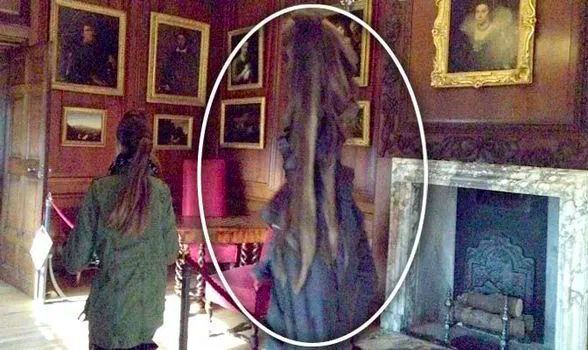
She has even been seen passing by the stables carrying a candle in her ghostly hand, dressed in an elegant grey outfit. The phantom silhouette has been sighted over the centuries by numerous visitors, employees and members of the royal family.

The mysterious figure of this legend has been linked to several theories about who she was. One of the most popular suggests she is the spirit of Dame Sybil Penn, a maidservant who served Queen Elizabeth I and was one of the monarch's closest companions.

The story goes that she was accused of poisoning people and was sentenced to death, a serious crime at the royal court of the time. Her tormented spirit is believed never to have left the palace walls, condemning her to wander in search of eternal peace.

A candle in her ghostly hand and an elegant grey outfit.

Another possible identity for the Grey Lady of Hampton Court Palace is Catherine Howard. She was the king's fifth wife and was confined to her room, from which she escaped to beg her husband for mercy. He rejected her, and Lady Catherine Howard was dragged away while she could be heard screaming for her life.

Her life ended in tragedy, with a scream from the galleries, after she was beheaded at the Tower of London.

Visitors constantly report a strange feeling when walking through that gallery, and during one of the tours in 1999, two women fainted in the very spot where Lady Howard screamed for her life in 1541.

Portrait miniature of a 16th-century lady, perhaps Catherine Howard, painted by Hans Holbein the Younger
Portrait of a Lady, perhaps Catherine Howard, c. 1540, by Hans Holbein the Younger (Royal Collection). Public domain, via Wikimedia Commons.
← Back to blog

4 Strange British Traditions That Are Still Alive

4 Strange British Traditions That Are Still Alive

British CultureHanxue School · Blog

4 Strange British Traditions That Are Still Alive

By Hanxue SchoolOctober 20262 min read

When we think of the United Kingdom, we imagine afternoon tea, red buses and Big Ben. Yet its culture is also full of traditions so curious they seem to come from another era. Discover four of the most surprising ones!

1. The Cheese Roll: Chase It Downhill!

Participants running down the slope of Cooper's Hill during the cheese-rolling race
A race at Cooper's Hill, Gloucestershire, in 2013. Photo: Dave Farrance, via Wikimedia Commons.

At Cooper's Hill, England, a peculiar competition takes place every year: participants race downhill chasing a wheel of Double Gloucester cheese. The first to cross the finish line wins the cheese, although falls and bumps are part of the risks of this race.

Did you know...?

The slope is so steep that competitors often end up rolling rather than running.

2. The Ravens of the Tower of London

An old British legend says that if the ravens leave the Tower of London, the monarchy will be in danger. That is why these birds receive special care inside the historic fortress.

Did you know...?

The person in charge of looking after the ravens is called the Ravenmaster.

Two ravens of the Tower of London, Jubilee and Munin
Jubilee and Munin, two of the ravens of the Tower of London. Photo: Colin, via Wikimedia Commons.

3. Morris Dancing: Dancing with Bells and Sticks

Morris dancers in the grounds of Wells Cathedral, England
Morris dancing in the grounds of Wells Cathedral, England. Public domain, via Wikimedia Commons.

Morris dancing is an English folk dance in which the dancers use handkerchiefs, sticks and bells strapped to their legs. It is performed at festivals and traditional celebrations to keep the folklore of different communities alive.

Did you know...?

There are different styles of this dance, with costumes and movements that vary by region.

4. Bog Snorkelling: An Out-of-the-Ordinary Competition

In Wales, the World Bog Snorkelling Championship became popular, a competition in which participants swim along a water-filled channel in a peat bog wearing a mask, snorkel and flippers. A race very different from any other!

Did you know...?

Competitors must move forward by kicking with their legs, without swimming in the conventional way.

Competitor in the World Bog Snorkelling Championship at the Waen Rhydd peat bog, Wales
A competitor at the World Bog Snorkelling Championship, near Llanwrtyd Wells, Wales. Photo: Rud-gr, via Wikimedia Commons.

Why Are These Traditions Preserved?

Although some may seem strange, they are part of the identity of the communities that celebrate them. They are a way of preserving history, bringing people together and passing customs down from generation to generation.

At Hanxue School we believe that learning a language also means discovering the culture that surrounds it. Because knowing a language is opening a window to new ways of understanding the world.

← Back to blog